

REVIEW: dust - Sky Is Falling
DUST’s SKY IS FALLING arrives as a statement of transformation from a band that has always refused to settle. Emerging from Australia’s burgeoning wave of genre-defiant artists, dust first captured attention with their abrasive, instinctive approach to post-punk, fractured rhythms, serrated guitars, and a saxophone that drifted between dissonance and dream. But SKY IS FALLING marks a shift: not a departure, but an expansion. It’s a record that stretches their sound toward free-jazz textures, shoegaze density, electronic experimentation, and a sense of introspective melancholy that feels both lived-in and freshly confronted. Instead of chasing one direction, DUST embrace contradiction as their guiding force. The result is an album that listens like an internal monologue, restless, nostalgic, agitated, searching, and one that invites the listener into the band’s ongoing dialogue with themselves.
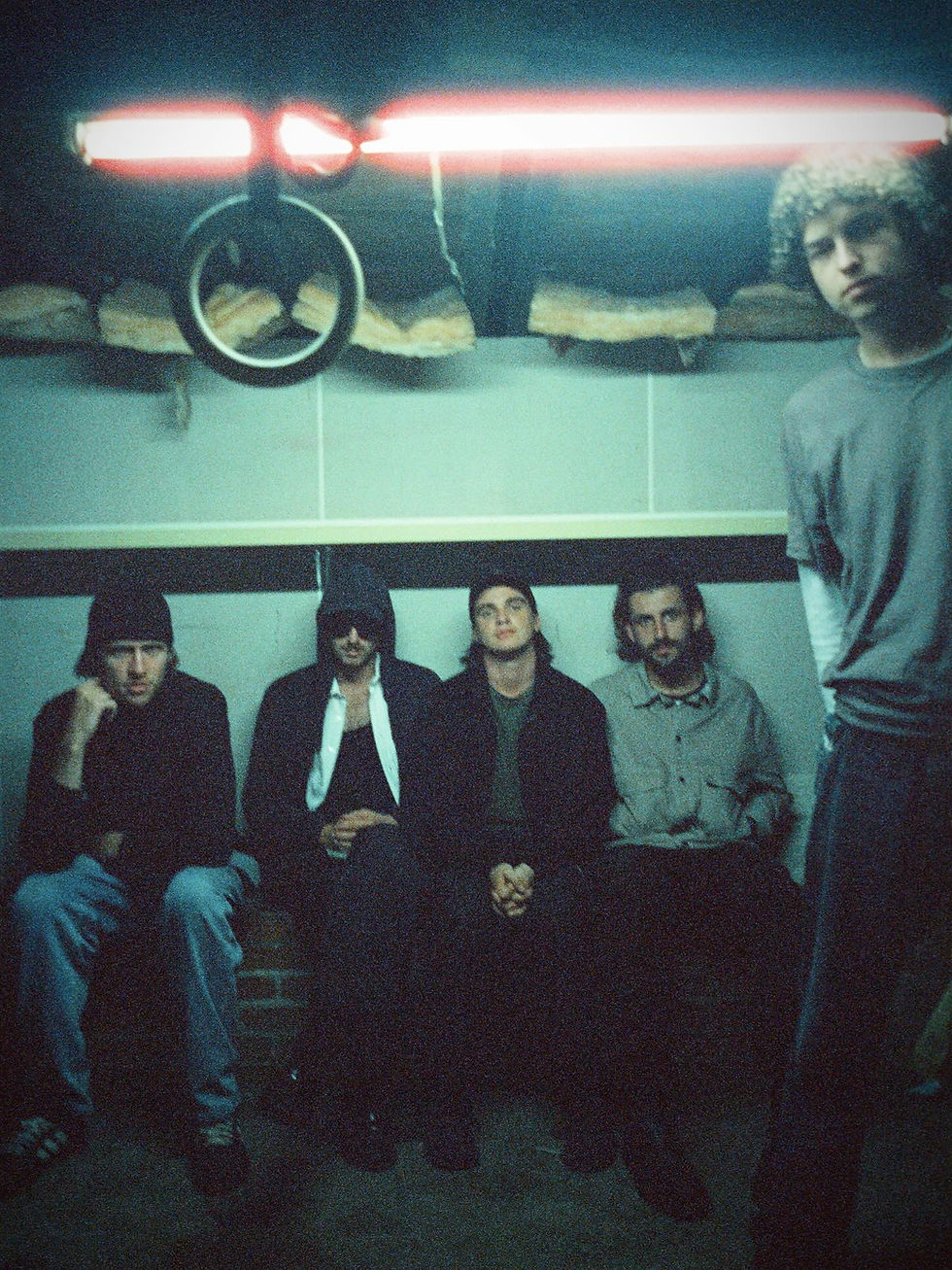
The title track, Sky Is Falling, serves as the emotional and thematic blueprint for everything that follows. Its slow, deliberate progression feels like the band inching toward collapse, with JUSTIN’s vocals weaving tightly around ADAM’s saxophone lines. LIAM’s looping bassline and KYE’s steady, penetrating drum pattern form a steady pulse beneath the surface turbulence. The lyrics fixate on two people trapped in a push-pull dynamic, unable to align their worldviews or bridge the growing emotional gulf between them. This tension between hope and resignation, connection and disconnection, echoes throughout the entire record. Sky Is Falling opens the album not with explosive force but with a creeping sense of inevitability, a quiet unravelling that sets the tone for dust’s evolving sonic and emotional landscape.
If the opener leans outward, exposing the friction between people, Aside pivots inward, exploring the friction within the self. Where Sky Is Falling stretches toward catharsis, Aside does the opposite, sinking into a muted, restrained melancholia. Breakbeat rhythms shape its pulse, and a Windows-95-like intro gestures toward post-humanism, a subtle suggestion of digital ghosts haunting modern identity. In contrast to the spiralling emotional volatility of the first track, Aside occupies a single, steady emotional hue, less dynamic, more meditative. It’s nostalgia not for the past itself but for the feeling of solitude in a world moving too quickly to catch. The comparison between the first two tracks is striking: Sky Is Falling is the storm, Aside the soft, overcast calm that follows, where you take stock of the wreckage but cannot yet rebuild.
Fairy emerges as the bridge between these opposing energies. It shares the introspective tenderness of Aside but brings back the emotional swell introduced in Sky Is Falling. The verses are controlled, nearly hesitant, but the choruses open up into shimmering dream-pop, with guitars influenced by ETERNAL DUST, BITUMEN and LOVE SPIRALS DOWNWARDS bleeding into saxophone and synth textures. The track feels weightless yet heavy, grounded yet otherworldly, a blur of memory and emotion. Lyrically, Fairy leans into childhood recollection, though not in a sentimental way. Instead, it examines the confusion of nostalgia, how remembering feels both comforting and destabilising. If Aside searches for stillness and Sky Is Falling grasps at connection, Fairy floats in between, unable to land but unwilling to drift away.
That tension becomes sharper in Day Tight, a track that turns dust’s introspective lens back on itself. Where Fairy and Aside yearn for clarity, Day Tight questions whether this longing is real or merely a cultural script. JUSTIN critiques the self-help mindset, its cycles of diagnosis, self-correction, and endless internal digging, while simultaneously acknowledging his own entanglement in it. This self-awareness adds a necessary edge to the album, grounding its softer moments with a more cynical, even humorous, undertone. Compared to the hazy tenderness of Fairy, Day Tight feels sharper, more grounded; compared to the emotional unravelling of Sky Is Falling, it feels more resigned. It’s the moment where the album admits that introspection can sometimes be a trap as much as a tool.
Everything converges in In Reverie, the album’s closing track and its most hypnotic. The doubled vocals create an eerie, autotuned shimmer, comforting yet uncanny, while the saxophone and guitars intertwine with gentle insistence. The track absorbs elements from its predecessors: the emotional unease of Sky Is Falling, the restraint of Aside, the dreamlike glow of Fairy, and the self-awareness of Day Tight. But rather than resolving these tensions, In Reverie simply lets them settle. A spoken-word outro eases the listener out of the album’s spiralling introspection, offering a quiet release without a definitive conclusion.
Together, these tracks create a body of work that is not linear but conversational. Each song reframes the emotional landscape of the one before it, creating an evolving narrative about nostalgia, self-reflection, longing, and the fear that nothing inside us can be fully fixed. SKY IS FALLING is not an album of answers, it’s an album of questions, honest in its contradictions and compelling in its refusal to settle. dust have crafted their most nuanced work yet: melancholic, confrontational, forward-leaning, and achingly human.
Score: 7/10
SKY IS FALLING was released on 10th November 2025 via
Words: Mia Gailey
Photos: Andrew Briggs


Comments